Long, wet winters and mild temperatures make the Lower Mainland one of the easiest places in Canada for mold to grow indoors. Mold often starts in places you cannot see, such as inside wall cavities, under flooring or in attics. Knowing the early warning signs helps you act before a small issue becomes a costly repair.
1. A Persistent Musty Smell
An earthy, damp odour that does not go away with cleaning is one of the most reliable signs of hidden mold. Pay attention to basements, closets on exterior walls and under sinks.
2. Visible Spots or Staining
Black, green, grey or white spots on drywall, grout, window frames or ceilings are a clear signal. Yellow or brown water stains also suggest moisture that can feed mold growth.
3. A History of Leaks or Flooding
If your home has had a plumbing leak, roof leak or flooding, mold may have started growing within 24 to 48 hours of the water appearing, even if surfaces look dry now. Our guide to mold after water damage explains why.
4. Constant Window Condensation
Heavy condensation on windows each morning means indoor humidity is high. Over time, that moisture collects on sills and walls and creates ideal mold conditions.
5. Peeling Paint or Warped Surfaces
Bubbling paint, lifting wallpaper, soft drywall or warped baseboards often point to moisture behind the surface.
6. Allergy or Breathing Symptoms Indoors
Sneezing, congestion, itchy eyes, coughing or headaches that improve when you leave home may be linked to indoor mold. Children, older adults and people with asthma tend to be most sensitive.
7. High Indoor Humidity
Indoor humidity that regularly sits above about 50 percent encourages mold growth. An inexpensive hygrometer can tell you a lot about your home's risk.
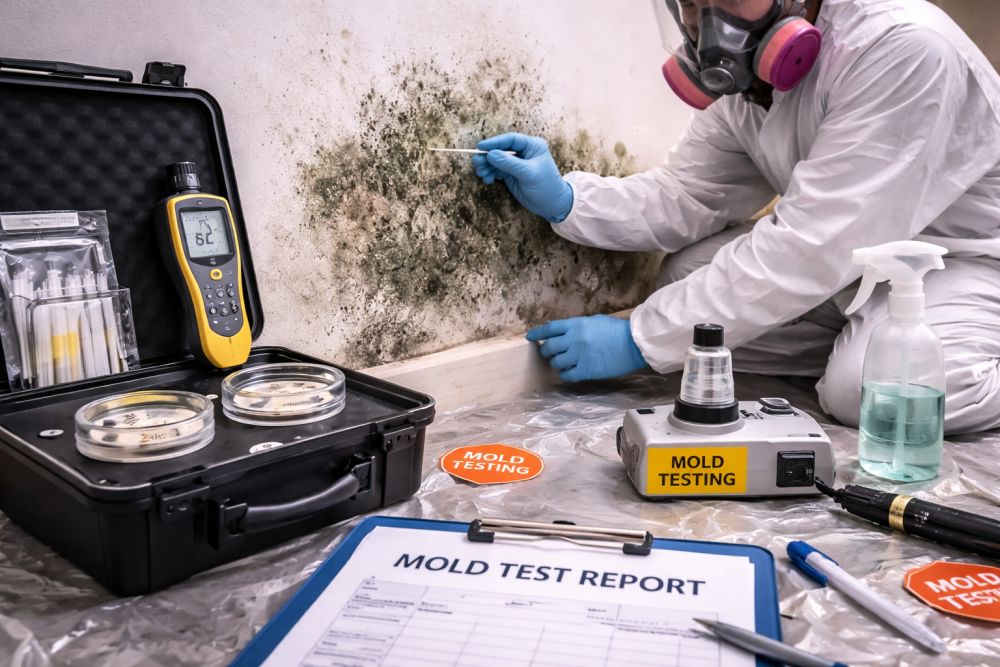
What Professional Mold Testing Involves
Visual inspection and moisture mapping
An inspector checks for visible growth and uses moisture meters and thermal imaging to find damp areas behind surfaces.
Air sampling
Indoor air samples are compared with an outdoor baseline to see whether spore levels inside are elevated.
Surface sampling
Tape lifts or swabs confirm what type of growth is present on suspect surfaces.
Lab report and recommendations
Results are explained in plain language, along with clear next steps. Visit our mold testing service page to learn more.
Why Not Use a DIY Mold Kit?
Home kits can show that mold spores exist, but spores are present almost everywhere. Without an outdoor comparison, moisture investigation and professional interpretation, kit results rarely answer the real questions: where is the mold, and how serious is it?
Frequently Asked Questions
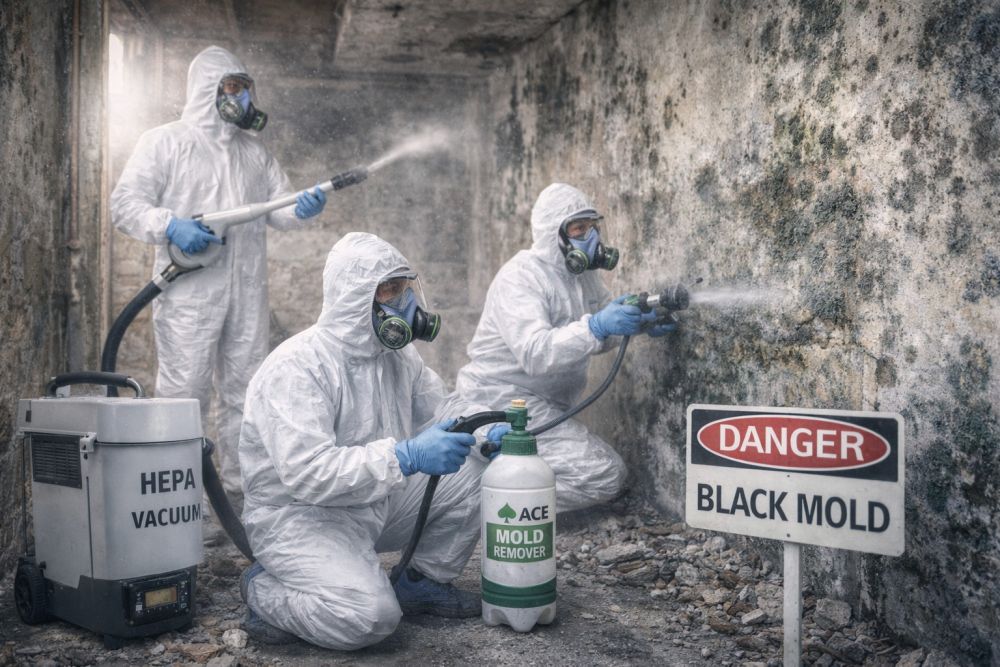
Is black mold more dangerous than other types?
Colour alone does not tell you how harmful mold is. Any significant indoor mold growth should be investigated and addressed.
Can I just clean mold with bleach?
Small surface spots can be cleaned, but bleach does not fix the moisture source and may not reach growth inside porous materials.
What happens if mold is found?
You will get a plan to fix the moisture problem and remove contaminated materials. See our mold removal services.
Worried about mold at home?
ACE Environmental provides certified mold testing with clear, lab-backed results across Vancouver, Burnaby, Surrey and the North Shore.
Book mold testing or call +1 778-318-9904.