Carbon dioxide (CO2) is the gas we exhale with every breath. In a well-ventilated space it disperses quickly, but in rooms with poor air exchange it builds up. Elevated CO2 is one of the clearest signs that a home, office or classroom is not getting enough fresh air. CO2 testing shows you where ventilation needs attention.
What Are Healthy Indoor CO2 Levels?
- Outdoor air: roughly 420 ppm
- Well-ventilated indoor spaces: often 600 to 800 ppm
- Health Canada long-term exposure limit: 1,000 ppm averaged over 24 hours
- Above 1,000 ppm: stuffiness, drowsiness and complaints become more common
Why High CO2 Matters
At typical indoor levels, CO2 is not toxic like carbon monoxide. However, high readings mean other pollutants are also building up, such as odours, VOCs and airborne particles. People in poorly ventilated spaces often report:
- Tiredness and difficulty concentrating
- Headaches and a stuffy feeling
- Reduced productivity in offices and classrooms
- Poor sleep quality in bedrooms with doors and windows closed
Common Causes of Elevated CO2
- Airtight modern homes without mechanical ventilation running
- HVAC systems with low fresh air intake settings
- Crowded meeting rooms, classrooms and fitness studios
- Closed bedrooms overnight with multiple occupants
- Blocked or poorly maintained ventilation equipment
How Professional CO2 Testing Works
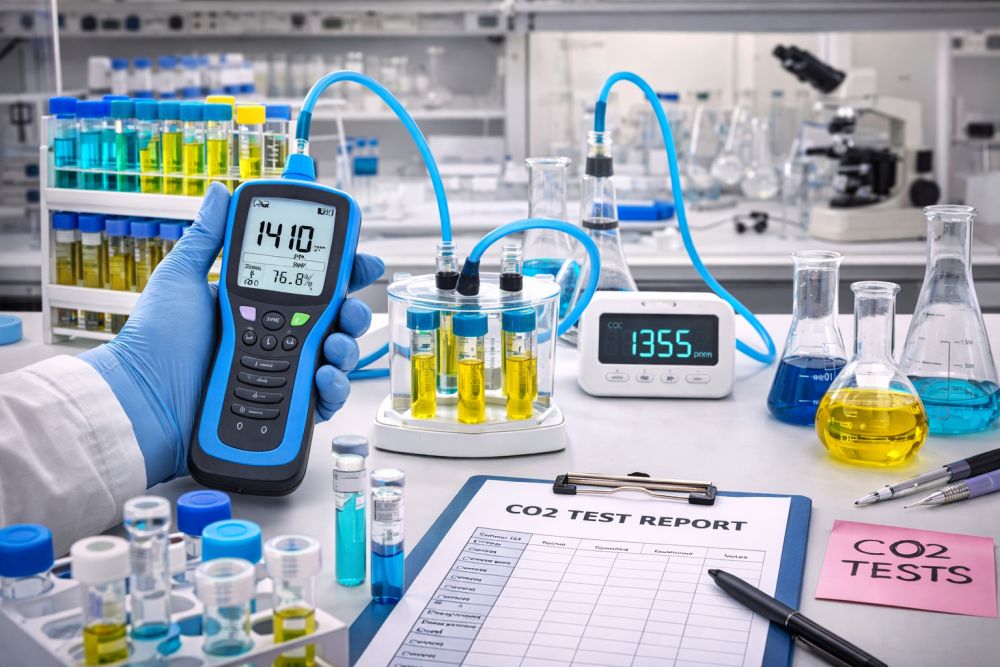
Continuous monitoring
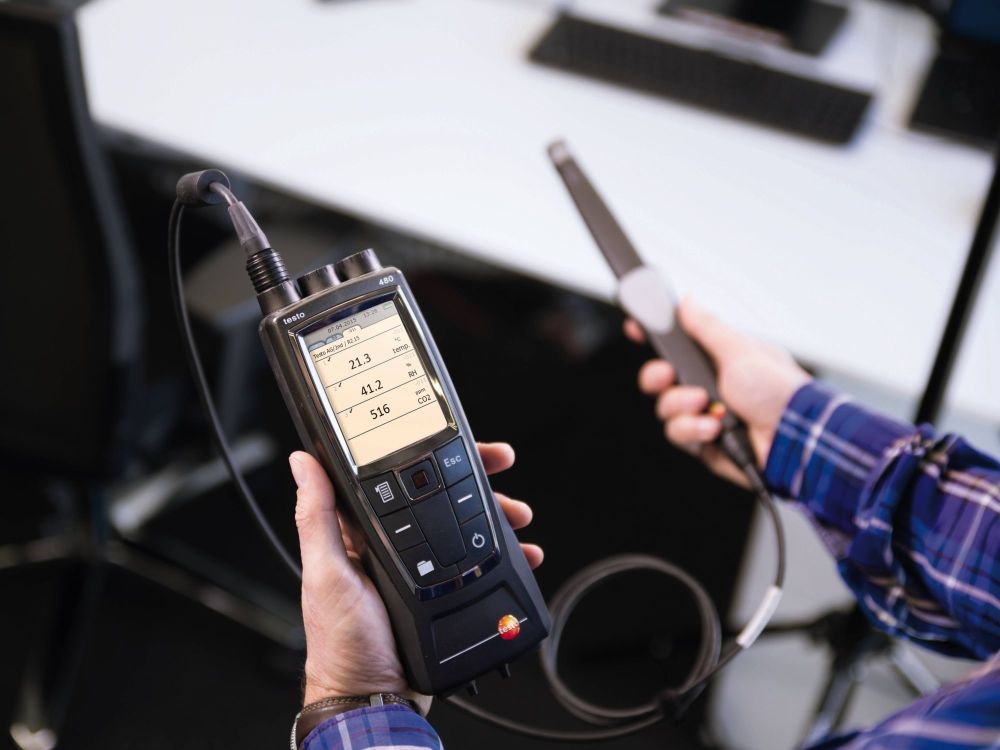
Calibrated data loggers record CO2, temperature and humidity over hours or days to capture real occupancy patterns.
Spot measurements
Readings in multiple rooms identify problem areas quickly.
Ventilation review
Results are compared with HVAC settings and occupancy to recommend practical improvements.
Learn more on our carbon dioxide testing service page.
How to Lower Indoor CO2
- Run your HRV or ERV continuously, not only on high settings occasionally
- Increase outdoor air supply in commercial HVAC systems
- Open windows briefly when outdoor air quality allows
- Reduce occupancy in small meeting rooms or schedule breaks
- Service ventilation equipment and replace filters regularly
CO2 and Overall Indoor Air Quality
CO2 is just one piece of the indoor air puzzle. A broader indoor air quality assessment can also look at VOCs, particulates, mold and humidity. And remember, CO2 is different from carbon monoxide; read our carbon monoxide safety guide.
Frequently Asked Questions
Can a portable CO2 monitor replace professional testing?
Good monitors are helpful for trends. Professional testing adds calibrated equipment, multi-room data and ventilation recommendations.
Is high CO2 common in new homes?
Yes. New homes are built very airtight, so mechanical ventilation must be used properly.
Do schools and offices need CO2 testing?
It is one of the most practical ways to verify that ventilation systems are delivering enough fresh air.
Get fresh air where it counts
ACE Environmental provides CO2 and ventilation testing for homes, offices and schools across Greater Vancouver.
Book CO2 testing or call +1 778-318-9904.