After asbestos, mold, lead or air quality testing, you receive a lab report filled with sample numbers, units and technical terms. Understanding the basics helps you make confident decisions about removal, renovation and safety. This guide explains the key parts of an environmental lab report and why the chain of custody form matters.
What Is a Chain of Custody Form?
A chain of custody (COC) form travels with samples from collection to analysis. It records:
- Who collected each sample, and when
- Sample IDs, locations and material descriptions
- The analysis requested
- Every handoff, signed and dated, until the lab receives the samples
This unbroken record makes results defensible for municipal permits, WorkSafeBC compliance, insurance claims and real estate transactions. You can find our submission forms on the forms page.
Key Parts of a Lab Report
Sample ID and description
Each result is tied to an ID that matches the COC form and site notes, such as "Kitchen ceiling texture" or "Basement air sample".
Analysis method
The report lists the method used, for example Polarized Light Microscopy (PLM) for asbestos bulk samples or spore trap analysis for mold air samples.
Result and units
Results are shown in units that depend on the test, such as percent asbestos, spores per cubic metre, micrograms of lead per square foot, or ppm for gases.
Detection limit
The lowest amount the method can reliably detect. A result reported as "below detection limit" or "not detected" means the substance was not found above that threshold.
Quality notes
Labs may add comments about sample condition or interference. These help your consultant interpret results accurately.
Reading Common Report Types
Asbestos bulk samples
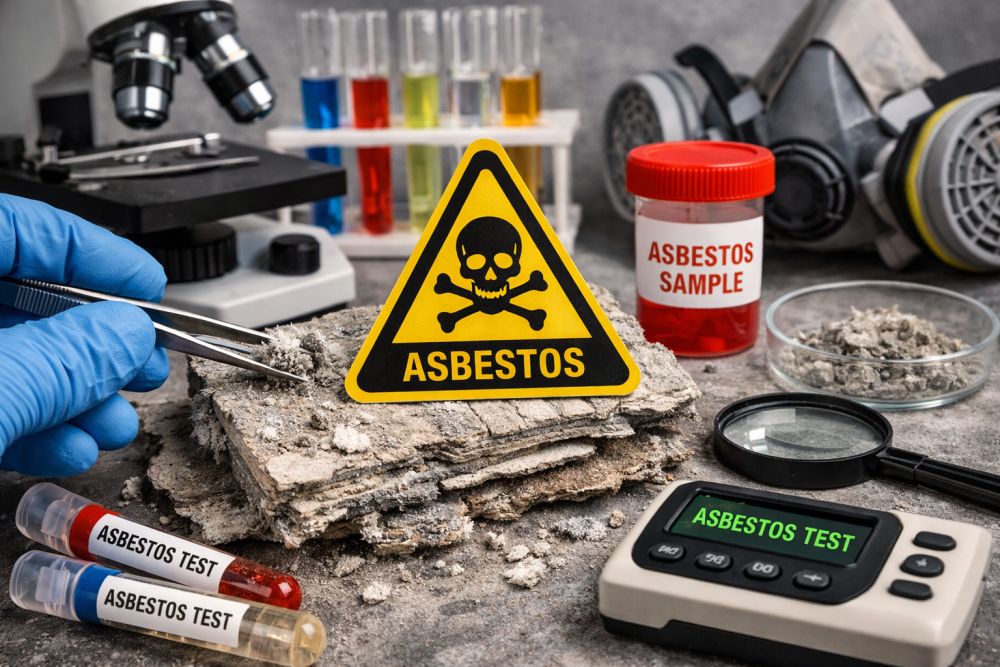
Results show whether asbestos was detected, its type, such as chrysotile, and its estimated percentage. In BC, materials containing asbestos above regulatory thresholds must be handled as asbestos-containing material. See asbestos testing.
Mold air samples
Indoor spore counts are compared with an outdoor sample. Elevated indoor counts or different spore types inside suggest an indoor source. See mold testing.
Lead paint and dust
Paint results show lead concentration, while dust wipes indicate how much lead dust is on a surface. See lead testing.
Air quality tests
Results for CO2, CO, formaldehyde and VOCs are compared with Health Canada guidelines where they exist.
Why Professional Interpretation Matters
Lab data is only part of the picture. Building history, sampling locations, weather and occupancy all influence what a result means. A qualified consultant combines these factors to give you clear recommendations rather than just numbers.
Tips for Using Your Report
- Keep digital and paper copies with your property records
- Share reports with contractors before work begins
- Provide them to buyers, strata councils or insurers when requested
- Update testing after major work or new damage
Frequently Asked Questions
What does "trace" mean on an asbestos report?
Trace means asbestos was observed in very small amounts. Your consultant will explain how that affects handling requirements.
Can I submit my own samples?
Some tests allow it, but reports used for permits or compliance should be collected by qualified professionals.
How long should I keep lab reports?
Keep them for as long as you own the property, and pass them on when you sell.
Related: asbestos testing before renovation.
Questions about your results?
ACE Environmental explains every report in plain language and helps you plan the next step.
Contact our team or call +1 778-318-9904.